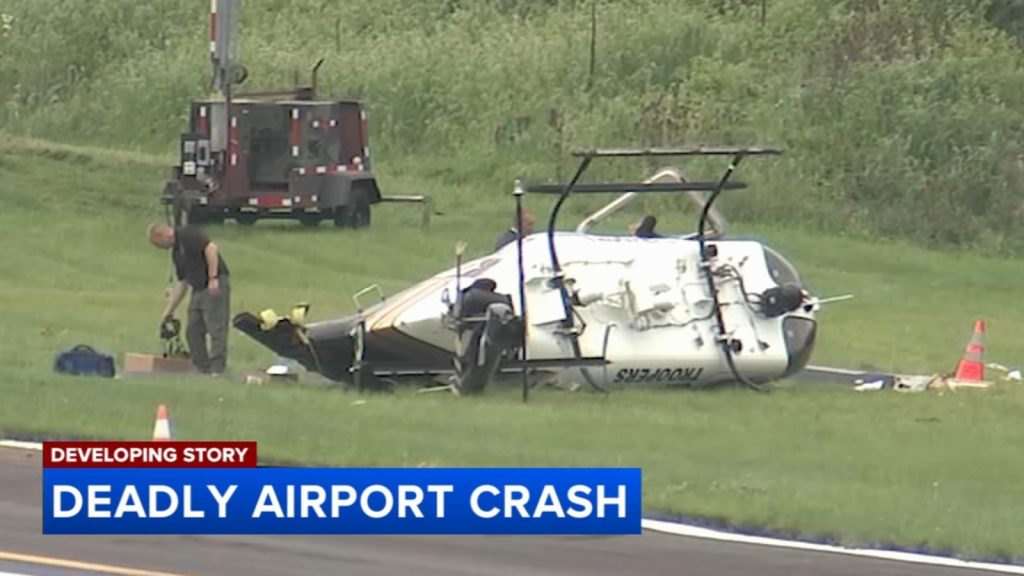
A Cessna 150 was in an “unusual attitude” before it struck a Pennsylvania State Police helicopter in Carlisle, federal investigators said. The midair collision killed the Cessna pilot and injured two troopers, prompting an ongoing NTSB investigation in Cumberland County.
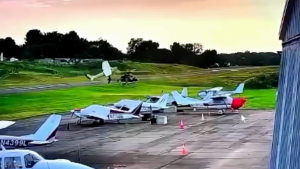
National Transportation Safety Board eastern region aviation accident investigator Aaron McCarter described the Cessna’s movements before impact. He said video evidence shows the plane flying at an unusual altitude in a steep nose-up position with its right wing low, rocking back and forth.
“Then it temporarily leveled off and for reasons unknown, flew off the right side of the runway and impacted the helicopter,” McCarter said.
Recovery of the two troopers
The two state troopers aboard the Bell 407 helicopter, Corporal Bryce Corman and Trooper Jason Mills, were taken to a hospital after the crash. Both have since been released and are recovering at home, according to state police.
The Cessna pilot, Dr. Paul Sokoloski of Penn State Health, was killed in the collision at Carlisle Regional Airport.
What investigators are examining in Carlisle
Federal investigators said they have recovered all debris from the scene. They are now analyzing data cards pulled from both aircraft on Friday. Officials declined to discuss the content of communications between the planes, though they confirmed contact had been established.
John Gagliano, an aviation attorney and former Navy pilot, said the data cards could reveal key details. He told reporters the devices will show precise three-dimensional coordinates, height above ground, and potentially engine power levels.
Based on his review of the video, Gagliano said the Cessna’s path raised questions. “It appears if the aircraft had stayed on the runway and executed a normal landing, either to full stop or touch and go, the plane would not have impacted the helicopter,” he said.
Maintenance and training details
The NTSB said the Cessna had undergone some type of maintenance earlier that day. The helicopter was conducting a training mission and performing a “hover taxi” at the time of the collision, investigators said.
Gagliano noted questions remain about the helicopter’s rotor position and visibility. He said the spinning main rotor blades can be difficult to see, making it unclear how far they extended over the runway.
The wreckage has been moved to a facility in Delaware for further examination.
Why an NTSB investigation works this way
The National Transportation Safety Board investigates every civil aviation accident in the United States. A standard probe can take 12 to 24 months and produces a final report on probable cause.
Investigators typically gather wreckage, flight data, cockpit voice recordings, video and maintenance records. They interview witnesses and air traffic controllers before publishing findings. Video evidence and recovered data cards, like those pulled in this case, often form a central part of that record.

Leave a Reply