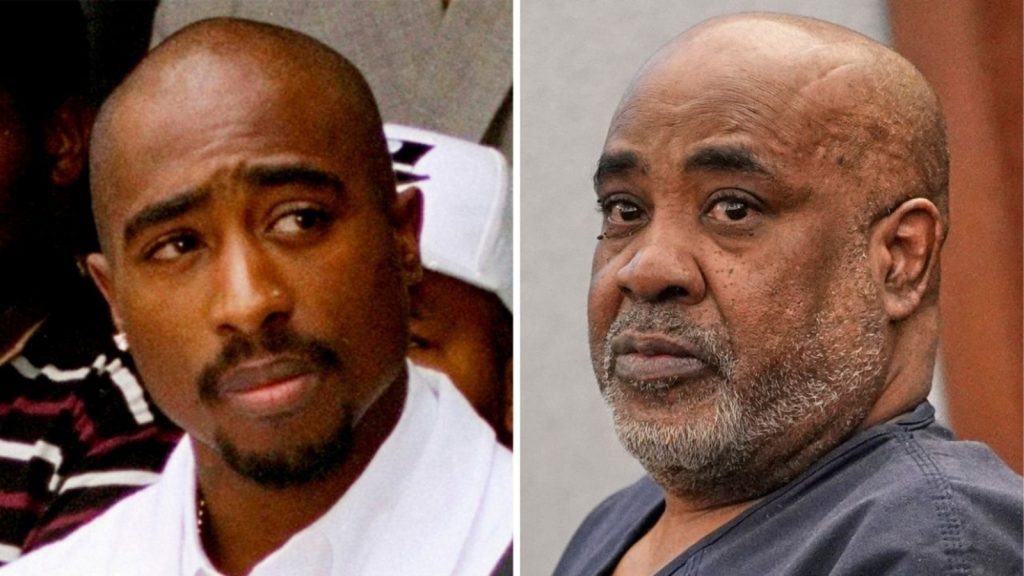

In a landmark conclusion to one of hip-hop’s most enduring mysteries, a Las Vegas jury has delivered a guilty verdict in the tupac shakur murder verdict case, finding Duane “Keffe D” Davis guilty of first-degree murder for orchestrating the 1996 killing of rap icon Tupac Shakur. The decision ends nearly three decades of unanswered questions surrounding one of the most high-profile unsolved celebrity murders in American history.
The Guilty Verdict: A Decades-Long Wait Comes to an End
After a weekslong trial in Las Vegas, jurors found 63-year-old Davis guilty of a single count of murder with a deadly weapon. The panel of 16 jurors,four of whom served as alternates,deliberated for less than three hours before reaching their decision on Monday. The swift verdict underscored the strength of the prosecution’s case, which centered largely on Davis’s own words, public statements, and a 2019 memoir in which he described his involvement in the shooting.
Davis now faces a possible maximum sentence of life in prison. The prosecution indicated that it would dismiss the gang enhancement portion of the charge due to witness logistics, but the core murder conviction stands. For Tupac’s family, including his sister Sekyiwa “Set” Shakur, who cried and embraced the prosecutors after the verdict was read, the conviction represents long-awaited justice for the legendary rapper who died at age 25.
What the Prosecution Argued
Chief Deputy District Attorney Binu Palal built his case around a compelling narrative of premeditation and revenge. In his closing arguments, Palal told jurors that Davis acquired a gun and “went hunting” for Shakur and Death Row Records co-founder Marion “Suge” Knight after the two men and their entourage had beaten up Davis’s nephew, Orlando “Baby Lane” Anderson, earlier that fateful night.
The “Hunting” Narrative
Palal argued that the shooting was not a spur-of-the-moment act but rather a calculated plan. He pointed to testimony and Davis’s own accounts suggesting that the occupants of the white Cadillac searched for Shakur before spotting him on the road and making a U-turn to intercept his vehicle. “It’s a plan, not an impulse,” Palal told the jury.
Why Davis Was Charged Despite Not Pulling the Trigger
Prosecutors never argued that Davis personally fired the shots that killed Shakur. Instead, they contended that under Nevada law, someone who aids and abets a murder can be convicted of the crime itself. Davis, they said, provided the weapon, ordered the attack, and was present in the Cadillac from which the fatal shots were fired. He is the only surviving member of the four men prosecutors identified as occupants of the vehicle.
The Defense’s Strategy and Its Collapse
Davis’s defense attorney, Michael Sanft, attempted to portray his client as a fabricator motivated by profit rather than a participant in the killing. The defense called only three witnesses during the nine-day trial, compared to the prosecution’s 24. Sanft’s closing argument notably included reading an excerpt from Davis’s memoir that contained a racial slur, drawing audible discomfort from observers in the overflow courtroom.
During the trial, Sanft challenged the prosecution’s characterization of Davis as a “shot caller” within the South Side Compton Crips, asking jurors whether there was any evidence Davis had ever called the shots before or after the Shakur shooting. The defense also pointed to evolving inconsistencies in Davis’s accounts over the years as evidence of unreliability.
Davis’s Own Words: The Prosecution’s Most Powerful Weapon
Perhaps the most damning evidence against Davis came from Davis himself. Over the years, he gave multiple interviews, appeared in documentaries, and published his 2019 memoir, “Compton Street Legend,” in which he detailed his role in the killing. Palal held up the memoir during closing arguments and played an interview in which Davis encouraged viewers to purchase the book to learn “the real truth.”
Although the memoir contains a disclaimer that some facts were changed, Palal argued that while names, hotels, and minor details varied across accounts, the central narrative remained remarkably consistent: Davis placed himself inside the white Cadillac and acknowledged handing the gun to passengers in the back seat.
The Scrapbook Detail
In his rebuttal argument, prosecutor Marc DiGiacomo highlighted an especially damaging piece of evidence: a scrapbook Davis kept containing news articles about the Shakur killing. “This guy’s scrapbooking his murder, for God’s sake,” DiGiacomo told jurors. The detail painted a picture of a defendant who was deeply invested in the notoriety surrounding the case,and who stood to profit from it.
The Night That Changed Hip-Hop Forever
To understand the magnitude of this verdict, it’s essential to revisit the night of September 7, 1996. Tupac Shakur was in Las Vegas attending a Mike Tyson boxing match at the MGM Grand. After the event, Shakur and Knight were riding through the city when they stopped at a red light. A white Cadillac pulled up beside them, and shots rang out. Shakur was struck multiple times and died six days later from his injuries. Knight survived but was seriously wounded.
The shooting took place against the backdrop of a bitter East Coast-West Coast hip-hop rivalry that defined an era. Shakur was signed to Death Row Records, led by Dr. Dre and Suge Knight, while rival label Bad Boy Records, helmed by Sean “Diddy” Combs, was home to artists like The Notorious B.I.G. The competition between these two labels and their affiliated gangs,the South Side Compton Crips and the Mob Piru Bloods,fueled tensions that ultimately led to the deaths of both Shakur and Biggie Smalls.
Why It Took 30 Years to Charge Anyone
For nearly three decades, nobody was charged in connection with Shakur’s death. The breakthrough came when Davis began making public statements, openly claiming he was in the Cadillac and had passed the gun to others in the back seat. Investigators used these admissions as the foundation for their case.
The prosecution acknowledged that corroborating nearly 30-year-old evidence presented unique challenges. Material collected in the 1990s differs significantly from modern forensic standards, including hotel surveillance video from the night of the shooting. A Las Vegas hotel bill was reportedly found at Davis’s residence during a police search, though investigators could not determine its date or current location.
The Cultural Impact of the Verdict
The tupac shakur murder verdict marks the first time anyone has been held legally accountable for the rapper’s death. For hip-hop fans, true crime enthusiasts, and cultural historians who have followed this story for generations, the conviction represents more than just a legal outcome,it’s the closing chapter of a story that has been told and retold in songs, documentaries, and books for decades.
Davis’s son was present in the courtroom during the verdict and covered his face with one hand as the guilty decision was read. The emotional weight of the moment was palpable, with Tupac’s sister embracing prosecutors and crying tears that reflected both grief and relief.
What Happens Next
With the guilty verdict delivered, attention now turns to sentencing. Davis faces a maximum sentence of life in prison. A sentencing date has not yet been publicly announced. Legal experts will be watching closely to see whether Davis’s defense team pursues any post-trial motions or appeals, particularly given the unusual nature of a conviction based largely on a defendant’s own statements and memoir.
The verdict also raises questions about whether further legal actions could follow. While Davis is the only surviving member of the four men in the Cadillac, some observers have speculated about potential implications for others connected to the case, though no additional charges have been announced.
Conclusion: Justice for Tupac, Three Decades Later
The tupac shakur murder verdict closes one of the most significant chapters in hip-hop history. Duane “Keffe D” Davis, a former gang leader who spent years publicly profiting from his claimed role in one of America’s most notorious celebrity killings, will now likely spend the rest of his life behind bars. For Tupac Shakur’s family, friends, and millions of fans worldwide, the conviction offers a measure of closure that many had given up hope of ever seeing. While no verdict can undo the loss of a cultural icon whose influence on music, poetry, and social consciousness remains unmatched, the legal system has finally delivered an answer to a question that haunted an entire generation.

Leave a Reply